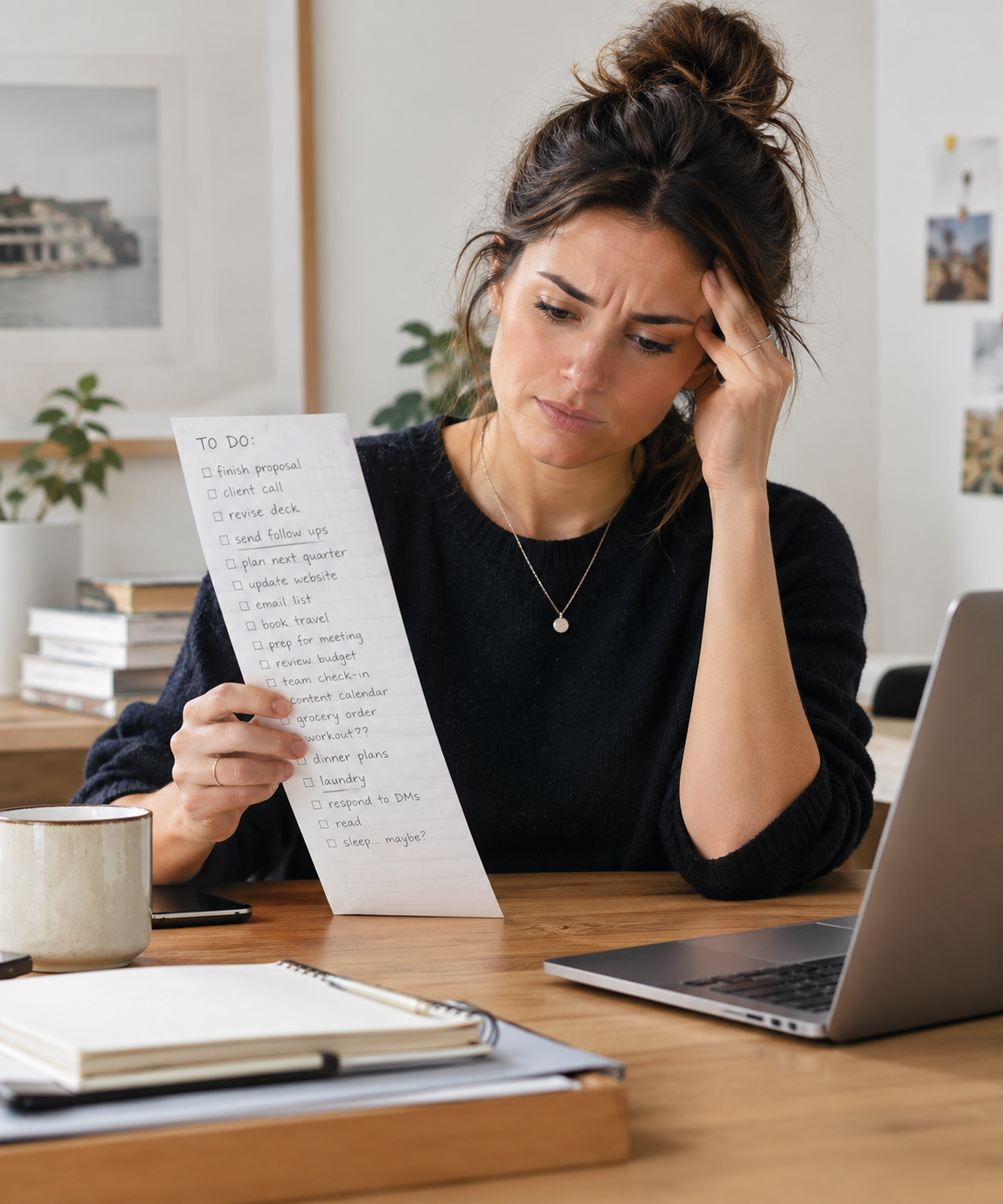
Navigating Postpartum Mental Health: A Guide for Self-Employed Moms
Takeaway: Postpartum can feel especially heavy when your healing, your income, and your business all depend on you at once. This piece offers grounded support for self-employed moms who need practical ways to protect their mental health without pretending this season is easy.

Trying to recover from childbirth while your income depends on your ability to keep showing up creates a very specific kind of pressure. Your body is healing, your sleep is unpredictable, your hormones are shifting, and in the background your mind is still thinking about clients, expenses, emails, and whether your business will still feel stable when you return.
As both a therapist and a business owner preparing for maternity leave myself, I understand how layered this experience can feel. You’re not just adjusting to motherhood. You’re also trying to protect something you built from the ground up.
Postpartum mental health for self-employed moms deserves more attention because the recovery period often includes financial pressure, identity shifts, and the fear of losing momentum. These are real stressors, not personal weaknesses, and understanding them helps you prepare instead of just react.
Understanding Postpartum Mental Health Challenges
Postpartum mental health changes are not just emotional reactions. They are influenced by hormonal shifts, nervous system changes, sleep disruption, physical recovery, and major life adjustments happening all at once.
Knowing what is common can reduce unnecessary fear and help you recognize when additional support may be helpful.
Postpartum Blues
What it is:
Often called the baby blues, this affects roughly 70–80% of mothers. It typically begins within a few days after delivery and improves within two weeks as hormones begin regulating.
Symptoms:
Emotional ups and downs, crying spells, irritability, anxiety, and feeling mentally overwhelmed even during calm moments. Many mothers are surprised by how emotionally sensitive they feel despite being grateful for their baby.
Real experience:
After my own births, I remember how evenings felt especially difficult. As the day ended, anxiety would increase because night meant less support, less certainty about sleep, and more responsibility. These emotional shifts can feel intense when no one prepares you for them.
Postpartum Depression
What it is:
Postpartum depression is more persistent and more disruptive than baby blues and affects about 1 in 7 mothers. It may begin weeks or months after birth, not just immediately afterward.
Symptoms:
Ongoing sadness, emotional disconnection, exhaustion that goes beyond sleep loss, guilt, lack of motivation, and difficulty feeling like yourself. Some women also experience intrusive thoughts that can feel frightening simply because they are unwanted.
Clinical insight:
Many women delay seeking help because they assume they should be able to push through. Early support often prevents symptoms from becoming more severe and helps mothers regain stability faster.
Postpartum Anxiety
What it is:
Postpartum anxiety is extremely common but often overlooked because it may not include sadness.
Symptoms:
Constant mental scanning for problems, racing thoughts, physical tension, panic symptoms, and difficulty relaxing even when the baby is sleeping. This can make recovery harder because rest becomes difficult even when opportunities exist.
Other Conditions
Some postpartum mental health conditions receive less attention but are equally important to understand.
Postpartum OCD:
Intrusive thoughts combined with checking behaviors or avoidance. These thoughts are distressing because they do not match the mother’s intentions or values.
Postpartum PTSD:
Can develop after difficult or traumatic births, especially when mothers feel unheard or unsupported during delivery. Symptoms can include flashbacks, avoidance, and heightened alertness.
Postpartum Psychosis:
A rare but serious condition requiring immediate medical care. Symptoms may include confusion, delusions, or hallucinations.
The Unique Struggles of Self-Employed Moms
The postpartum period already requires physical and emotional adjustment. Adding business responsibility increases the cognitive and emotional load significantly.
The Invisible Burden
Many mothers describe feeling like attention shifts completely to the baby after birth. Healthcare visits focus on infant development while mothers often receive minimal follow-up support for their own recovery.
Lisa Marceau described this as mothers becoming almost invisible after delivery. For self-employed women, this can also show up professionally. Visibility often equals opportunity in entrepreneurship, so stepping away can feel risky.
What helps:
Planning your own support system intentionally. This might include therapy, scheduled emotional check-ins, or identifying one trusted person focused on your well-being, not just your baby’s needs.
Balancing Work and Motherhood
Self-employed moms often face the reality that time off directly impacts income. This can create pressure to stay partially engaged during recovery.
Common stress points include:
Maintaining client relationships, protecting income stability, staying professionally relevant, and managing identity shifts when productivity temporarily decreases.
Practical strategy:
Instead of trying to maintain everything, many business owners benefit from simplifying their focus. Prioritize only what directly supports stability. Expansion plans, new projects, and extra commitments can often wait until your physical and mental recovery feels stronger.
Boundaries during postpartum are not limitations. They are protective structures.
Resources and Support Strategies
Support during postpartum does not have to be complicated to be effective. Small structural supports can significantly reduce emotional strain.
Telehealth and Online Therapy
Virtual therapy has made postpartum mental health support much more accessible. Many therapists now work with the realities of new motherhood, including sessions where babies are present.
This removes barriers like transportation, childcare, and scheduling stress. Support becomes something that can fit into your life rather than something else you must organize.
Community Support
Connecting with other mothers, especially entrepreneurs, can normalize experiences that otherwise feel isolating. Hearing how others navigated maternity leave, client communication, and financial planning often reduces unnecessary self-pressure.
Support can come from peer groups, maternal mental health communities, professional networks, or small trusted circles.
Evidence-Based Platforms
Lisa Marceau created Joyuus, a postpartum support platform designed to help mothers understand symptoms across mental, physical, and lifestyle changes during the first year postpartum.
Its goal is practical: help mothers understand what is normal, when to seek help, and how to connect to resources without confusion or dismissal. If this topic feels close to home, I go much deeper into postpartum mental health for self-employed moms in this episode of Thoughts From the Couch, including the six most common postpartum mental health challenges and practical ways to prepare for maternity leave as a business owner.
Postpartum mental health for self-employed moms requires balancing recovery with real-world responsibility. Financial planning matters. Boundaries matter. Support matters. Most importantly, realistic expectations matter.
This chapter is temporary, even if it feels intense while you're in it. Your capacity will expand again. Your routines will stabilize again. Your business can continue to grow alongside your life rather than competing with it.
Protecting your mental health during postpartum is not stepping away from your goals. It is what allows you to sustain them.
Frequently Asked Questions
What are the baby blues?
The baby blues describe temporary emotional changes affecting most mothers shortly after birth. Symptoms include mood swings, anxiety, and emotional sensitivity that typically improve within two weeks.
How can self-employed moms manage postpartum anxiety?
Reducing expectations, planning financial buffers, setting communication boundaries, and accessing virtual therapy can significantly reduce postpartum anxiety while maintaining business stability.
When should I seek help for postpartum depression?
If sadness, anxiety, emotional numbness, or difficulty functioning lasts beyond two weeks or begins interfering with daily life, professional support should be considered. Early intervention often leads to better outcomes.
Feeling successful but stretched thin? You don’t have to wait until you’re burned out to want things to feel easier.
The Balanced Boss is one-on-one coaching for women who want their success to feel steady, sustainable, and actually enjoyable.

MEET THE AUTHOR
Justine Carino
Justine is a licensed mental health counselor with a private practice in White Plains, NY. She helps teenagers, young adults and families struggling with anxiety, depression, family conflict and relationship issues. Justine is also the host of the podcast Thoughts From the Couch.
Recent Posts